- Calm school mornings are built at 8:00 PM the night before—moving five small decisions out of the morning removes most of the last-minute scramble.
- Protecting sleep comes first: the CDC recommends 9 to 12 hours of sleep per night for kids ages 6–12 and 8 to 10 hours for teens ages 13–18.
- Use a single entryway Launchpad for backpacks, shoes, and signed folders so nobody hunts for a left sneaker three minutes before the bus.
- Replace verbal nagging with a visual three-step checklist and one gentle five-minute departure chime.
Why School Mornings Break Down Before 7:30 AM
If you find yourself repeating "put your shoes on" four times in six minutes while your coffee goes cold, you do not have a discipline problem. You have a decision-density problem.
Most morning-routine advice tells exhausted parents to wake up an extra hour earlier at 5:15 AM to journal and prep gourmet breakfasts. That lasts about four days. By Friday, you hit snooze twice and feel worse than when you started.
A calm school morning does not require a 5 AM wake-up call; it requires removing decisions from the 30-minute departure window. When clothes, lunches, backpacks, and shoes are staged the night before, a household of working parents and school-age kids can move from wake-up to the front door in 30 to 45 minutes without raising a voice.
Here is the exact night-before setup, the minute-by-minute morning timeline, and the sleep math that determines whether your kids actually cooperate when the alarm goes off.
Step 1: The 8-Minute Night-Before Launchpad
A few calm minutes at 8:00 PM save far more frantic minutes at 7:20 AM, because nobody is fighting a departure clock at night.
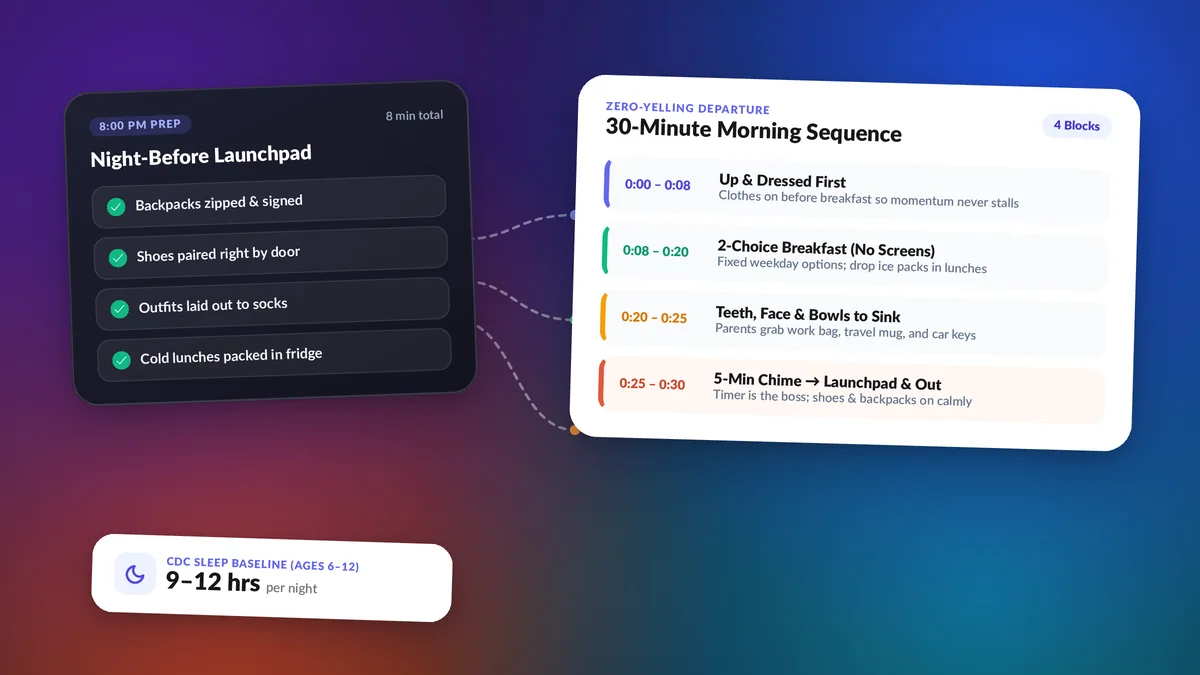
Set up one permanent Launchpad near the door you actually exit through—a wooden bench, two wall hooks, or a single plastic bin per child. Before bedtime stories start, five items land in that exact spot:
- Backpacks zipped and signed: Permission slips signed, library books tucked in, and laptops or tablets charging beside the bag (not inside kids' bedrooms).
- Shoes paired in plain sight: Both shoes touching each other right next to the backpack. No closet digging in the dark.
- Outfits picked to the socks: Lay out shirt, pants, underwear, and socks on a chair—or keep a five-slot hanging organizer filled on Sunday night.
- Cold lunch items packed: Sandwiches, cut fruit, and water bottles prepped in the fridge so morning means dropping an ice pack into the lunchbox and zipping it shut.
- Parent keys and work bag staged: Adults cause half of morning bottlenecks when car keys disappear into a coat pocket.
Check the Hidden Culprit: Sleep Math
No checklist on earth works smoothly on a sleep-deprived child. If getting out of bed feels like pulling a boulder uphill every morning, count backward from your wake-up time first.
According to the U.S. Centers for Disease Control and Prevention (CDC) and the American Academy of Sleep Medicine, school-age children ages 6 to 12 need 9 to 12 hours of sleep per 24 hours, and teens ages 13 to 18 need 8 to 10 hours. If a seven-year-old wakes up at 6:45 AM for school, a 10-to-11-hour night (comfortably inside that range) means lights-out between 7:45 PM and 8:45 PM—not 9:30 PM. Shifting bedtime just 20 minutes earlier often fixes morning stalling faster than any reward chart.
Step 2: The Calm 30-Minute Departure Timeline
Adjust the clock times to match your own bus stop or drop-off bell, keeping the exact block lengths intact. Notice one deliberate design choice: getting dressed happens before breakfast. Once kids sit down to eat in pajamas, momentum dies completely.
| Block | Minutes | Kids' Job | Parent's Job |
|---|---|---|---|
| Block 1: Up & Dressed | 0:00 – 0:08 | Bathroom, get fully dressed from night-before stack, brush hair | Start coffee/tea, set out 2-choice breakfast, drop ice packs in lunches |
| Block 2: Eat & Hydrate | 0:08 – 0:20 | Eat breakfast at the table (zero screens: they slow eating to a crawl) | Eat something yourself, check weather for jackets or umbrellas |
| Block 3: Teeth & Polish | 0:20 – 0:25 | Brush teeth, wash face, clear own bowl to the sink | Grab work bag, car keys, and travel mug |
| Block 4: Launchpad & Out | 0:25 – 0:30 | Shoes on at Launchpad, jacket on, backpack strapped | Five-minute chime rings; calmly walk out the door on time |
Step 3: Hand the Nagging to a Timer and a 2-Choice Menu
Kids tune out repeated reminders because a parent's voice becomes background static. Replace verbal countdowns with two external cues instead.
First, set a cheerful phone chime or smart-speaker alert five minutes before shoes-on time. When the bell chimes, the timer is the boss—not you. Second, shrink breakfast to a fixed weekday rotation of two fast options (for example, oatmeal or peanut butter toast on Mondays and Wednesdays; scrambled eggs or yogurt bowls on Tuesdays and Thursdays). Open-ended questions like "What do you want for breakfast?" invite ten minutes of negotiation you do not have.
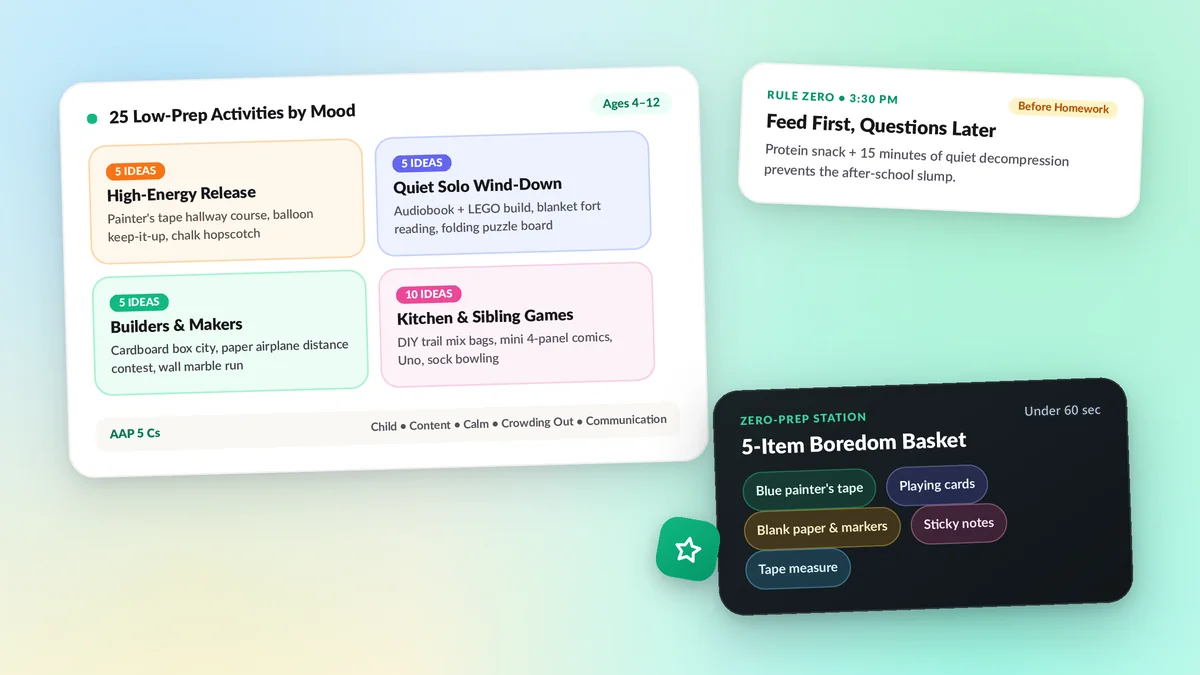
Want to pair your morning groove with a calm afternoon landing too? Check our 25 Low-Prep Screen-Free After-School Activities so the 3:30 PM slump stays just as smooth.
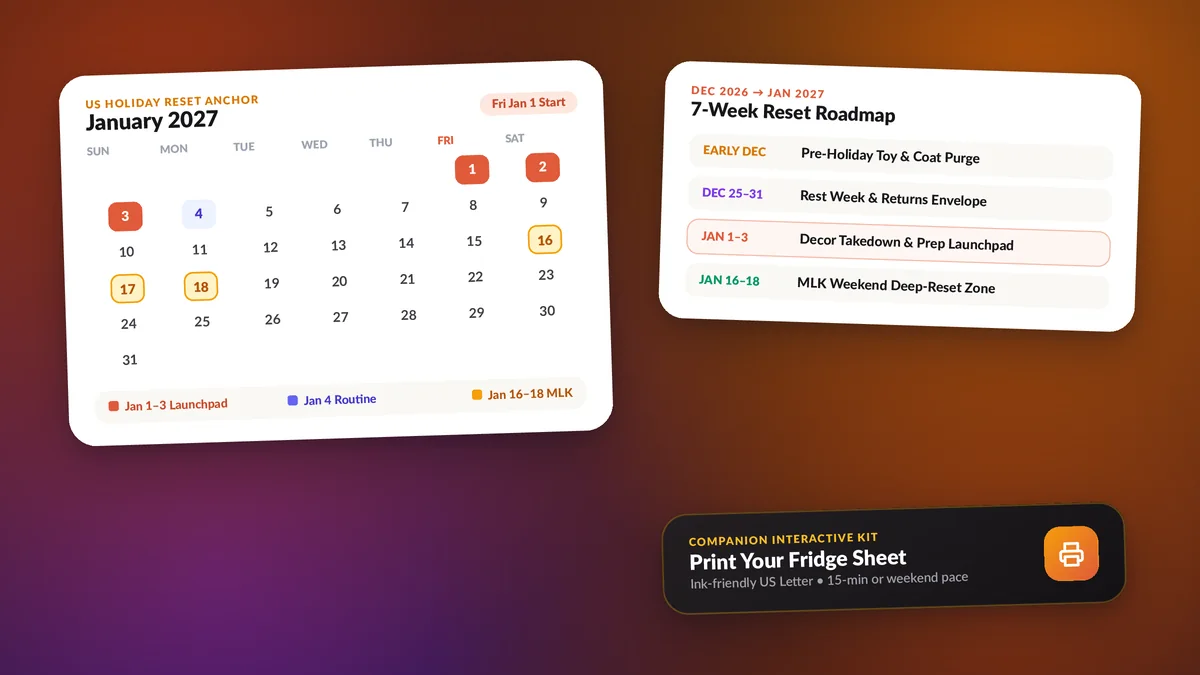
Interactive Printable Checklist